Explainer ·
AI Cat Story: What the Viral Videos Are and How to Make One
An AI cat story is a short video in which AI-generated cats act out a plot: a kitten family loses its home, a cat builds a police car out of soda cans, a chef cat burns the dinner. One such clip on TikTok has 12.9 million views. This guide covers what the genre is, why it works, how the videos are made, and how to make a 10-second one starring your own cat.
What is an AI cat story?
An AI cat story is a narrative video, usually 30 seconds to a few minutes long, in which every frame is made by AI and the characters are cats. The cats walk upright, cook, drive, cry and hug. A voiceover or captions carry the plot, and the video is cut for TikTok, Instagram Reels and YouTube Shorts.
The genre has its own channels. A YouTube channel named AI Cat Story has more than 116,000 subscribers and describes itself as a place where "cats and kittens experience the ups and downs of life, just like us". TikTok accounts such as AI Cat Tales post one melodrama after another, and the longer cuts run for 20 minutes on YouTube.
Three things separate an AI cat story from an ordinary AI cat video:
- A plot with a turn. Something goes wrong, the cat struggles, and the ending pays it off. A single cute clip of a cat yawning is not a story.
- Recurring characters. Papa cat, mama cat and a kitten with one distinctive marking appear across dozens of episodes, so viewers come back.
- Human situations. The cats face rent, illness, bullies, job interviews and birthdays. The comedy and the tears both come from a cat doing a human thing with a cat's face.
The style varies. Many channels use a soft 3D look, close to an animated film. Others go photorealistic, so the kitten in the rain looks like a real kitten. Some use claymation or hand-drawn styles. Our own clips are photorealistic, because they start from a photo of a real cat and the point is that the cat on screen is yours.
Why do AI cat stories get millions of views?
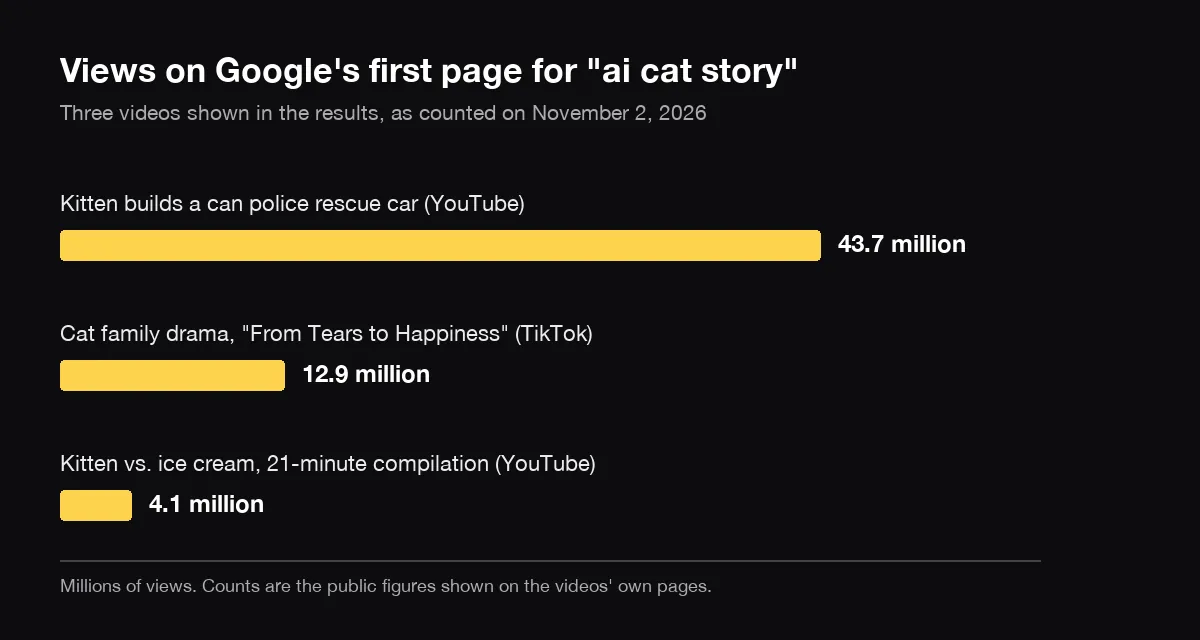
Because they combine the two things short-video platforms reward most: cats and a plot you have to watch to the end. A video of a kitten building a rescue car from cans has 43.7 million views on YouTube. A 21-minute compilation of a kitten struggling with an ice cream has 4.1 million.
The pull works on three levels. First, cats already own the internet. People stop scrolling for a cat face faster than for almost anything else, and an AI cat can be cuter than any real one: huge eyes, a round head, a tiny body in a big coat. Second, melodrama holds attention. The kitten family is thrown out in the rain at second three, so you stay to see whether they find a home. Platforms measure watch time, and a story that withholds the ending keeps watch time high. Third, the videos travel across languages. A cat crying in the rain needs no translation, and the same clip gets re-posted with Spanish, Arabic and Vietnamese captions.
There is a backlash too. A Reddit community called r/FacebookAIslop collects the saddest examples and mocks them, and the BBC has written about Chubby, an AI-generated cat whose misfortunes made him a TikTok celebrity, as a sign of how much AI-made content the feeds now carry. Both reactions point at the same fact: the genre is big enough to have critics.
What kinds of AI cat stories are there?
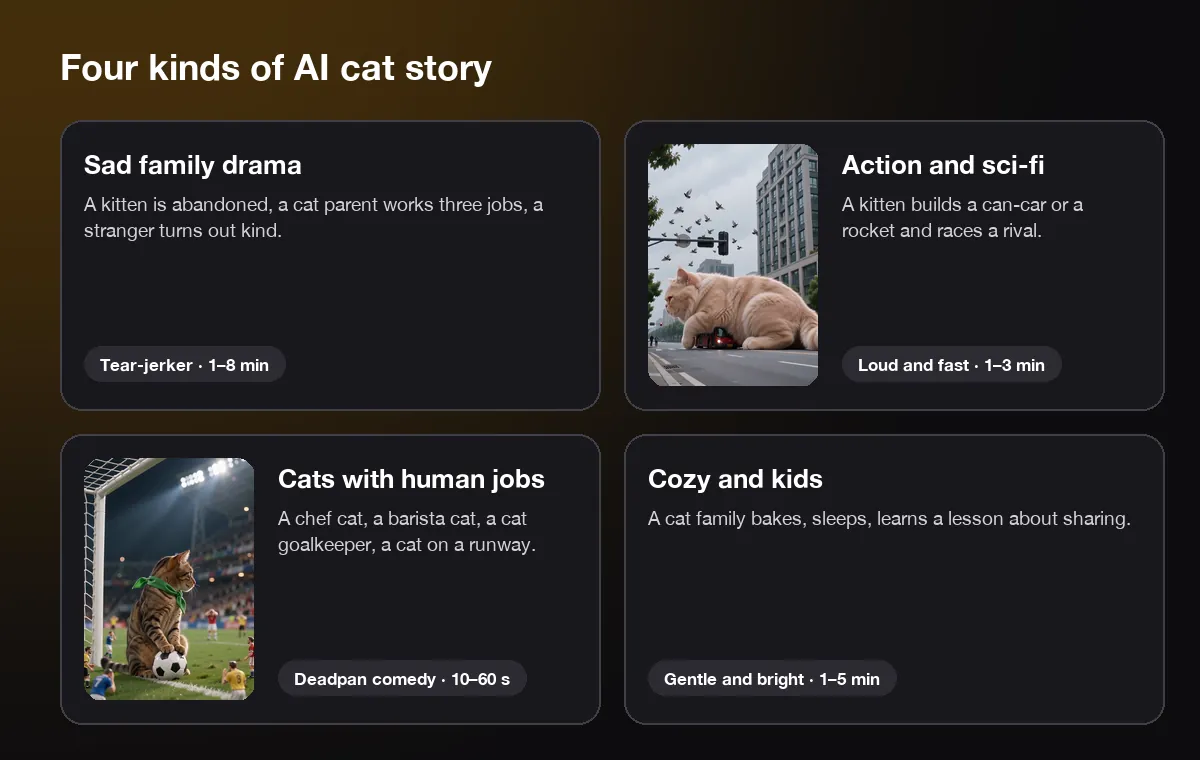
Four kinds cover almost everything in the feed: sad family dramas, action and science fiction, cats doing human jobs, and cozy stories for kids. The first kind gets the biggest numbers; the third is the one most people want to make with their own cat.
| Kind | Typical plot | Tone | Length |
|---|---|---|---|
| Sad family drama | A kitten is abandoned, a cat parent works three jobs, a stranger turns out kind | Tear-jerker, often with a moral | 1 to 8 minutes |
| Action and sci-fi | A kitten builds a can-car or a rocket and races a rival | Loud, fast, big music | 1 to 3 minutes |
| Cats with human jobs | A chef cat, a barista cat, a cat police officer, a cat on a runway | Deadpan comedy | 10 to 60 seconds |
| Cozy and kids | A cat family bakes, sleeps, learns a lesson about sharing | Gentle, bright colours | 1 to 5 minutes |
Sad family dramas are the heart of the genre. The TikTok clip with 12.9 million views is titled "From Tears to Happiness", and the formula is in the title: a loss, a struggle, a rescue. These stories lean on a narrator and on music, and the saddest ones are the ones Reddit mocks.
Action and science fiction stories turn kittens into engineers. The 43.7-million-view video is a kitten building a police rescue car out of cans. The plot is a build, a chase and a payoff, with sound effects doing much of the work.
Cats with human jobs are the short, funny kind. A cat runs a checkout, judges a baking show, reads the weather. The joke is the contrast: the cat does the job with total seriousness, and its instincts break through at the worst moment. This is the kind our generator writes, because a 10-second clip is enough for one job and one twist.
Cozy and kids stories are made for family channels. The cats are soft, the colours are bright, and every episode ends with a hug.
How are AI cat story videos made?
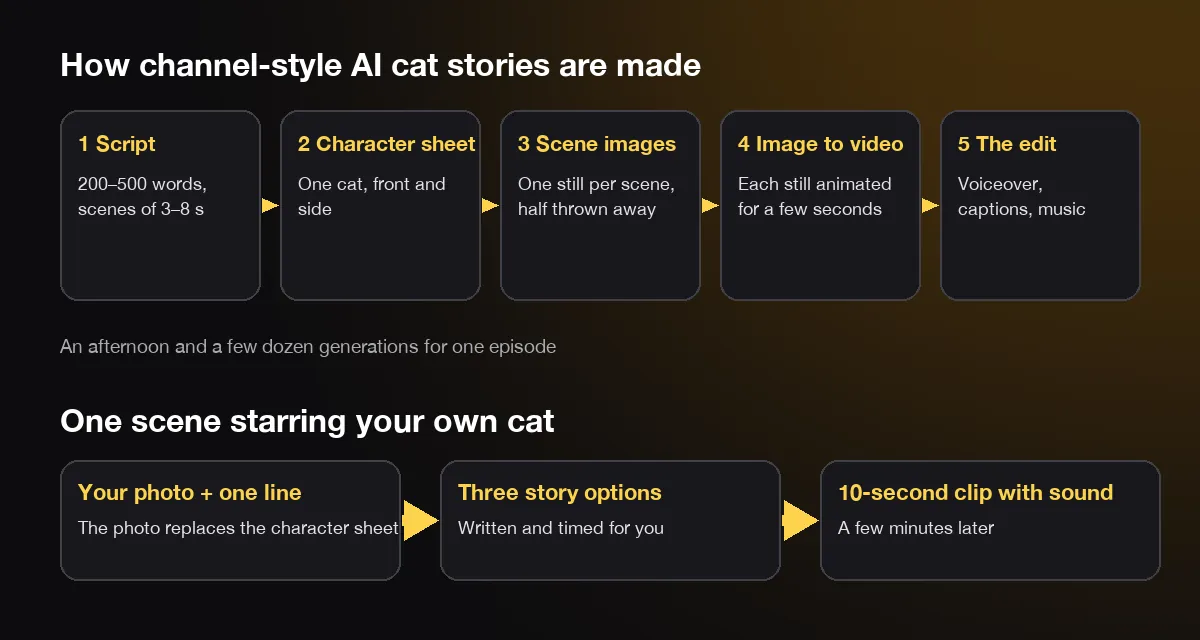
Most channel-style AI cat stories are built in five steps: write a script, design one cat character, generate a still image for every scene, turn each image into a short clip, then add voiceover, captions and music in an editor. One three-minute episode can take an afternoon and a few dozen generations.
Here is what each step involves.
- The script. Creators write the story first, often 200 to 500 words, broken into scenes of three to eight seconds each. Every scene names who is in it, where, and what happens.
- The character sheet. One image of each cat, from the front and the side, in the same clothes. Every later image is generated with this sheet as a reference so the kitten keeps its one white sock.
- Scene images. An image generator makes one still per scene from the script line and the character sheet. Creators throw away half of them: wrong paw count, wrong fur, a second kitten that was never written.
- Image to video. Each still goes into an image-to-video model, which animates it for a few seconds. Mouths, rain, cars and tears move. This is where most of the cost sits.
- The edit. Clips are cut together, a text-to-speech narrator reads the script, captions are burned in and a music bed goes underneath. Some creators add their own voice.
The weak points are consistency and cost. Keeping one cat recognisable across 40 scenes is the hard part, which is why so many channels use a stylised 3D look: a cartoon kitten with one marking is easier to repeat than a photorealistic tabby. Cost adds up because every scene is generated several times before one passes.
There is a shorter path for a single scene. If you only want one 10-second story, the script, the identity and the sound can all be handled in one pass, and the character sheet is replaced by a photo of a real cat. That is the next section.
How do you make an AI cat story with your own cat?
Upload one clear photo of your cat, type one line about what happens, pick 5, 10 or 15 seconds, and choose one of three story options written for you. A few minutes later your cat acts out the scene in a vertical video with sound effects and music, in the same room and with the same markings as the photo.
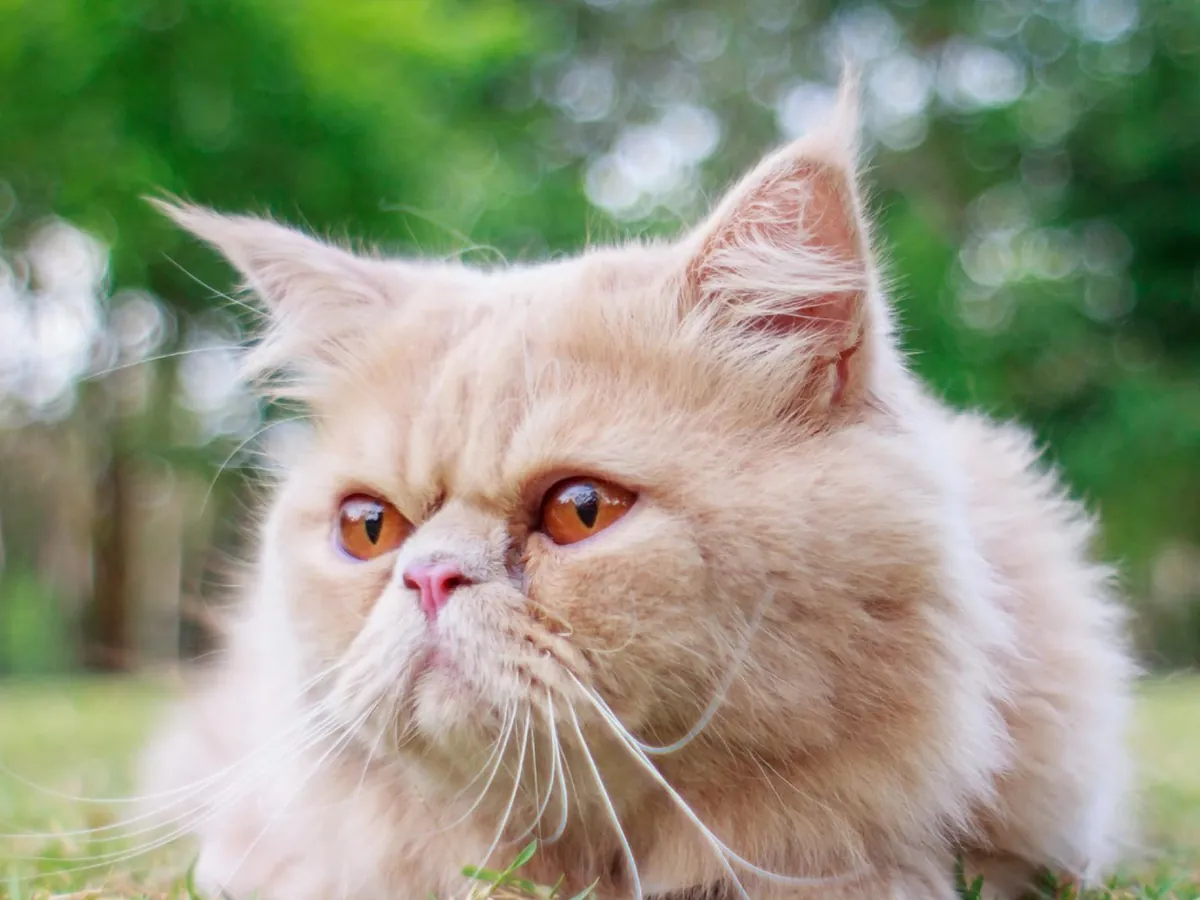
The photo does most of the work, so pick it with care. Your cat should face the camera with both eyes open and its whole face in good light. Sitting, standing or a close-up all work. Avoid photos where the cat is curled up asleep or turned away, because the model has no face to hold on to and your cat may come out as a generic one. A sharp photo of 1,000 pixels or more on the short side keeps the fur and markings true.
The line can be plain. "My cat is a goalkeeper and saves a penalty" is enough. The AI cat video generator turns that line into three storyboards, each with a different angle: one played completely straight, one pushed into the absurd, and one filmed as if someone caught it on a phone. Each storyboard has something happening every one or two seconds and ends on a twist. You pick one, or skip them and use your own words.
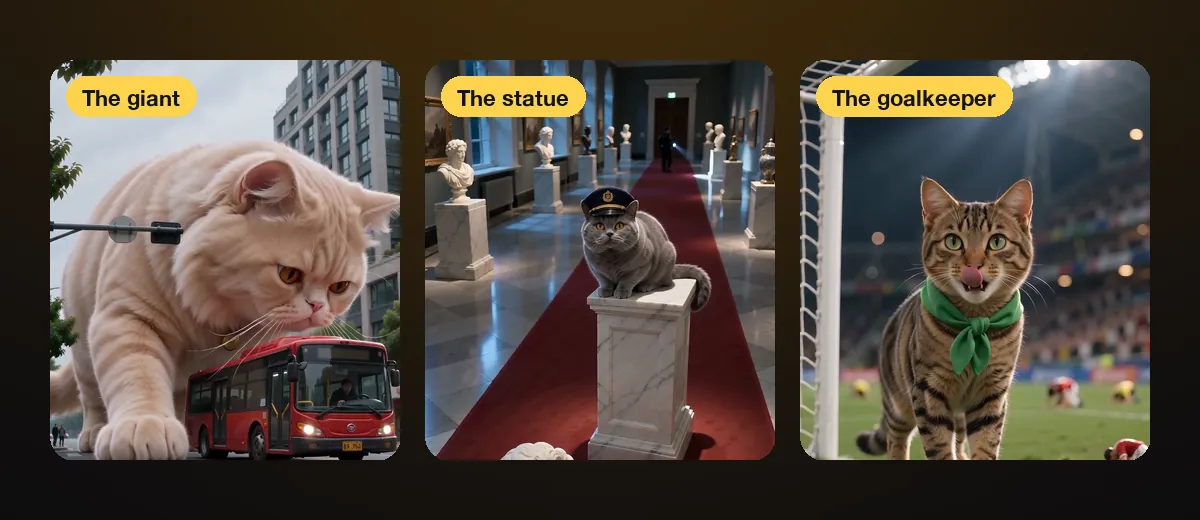
Three examples we made this way, each from one photo and one sentence:
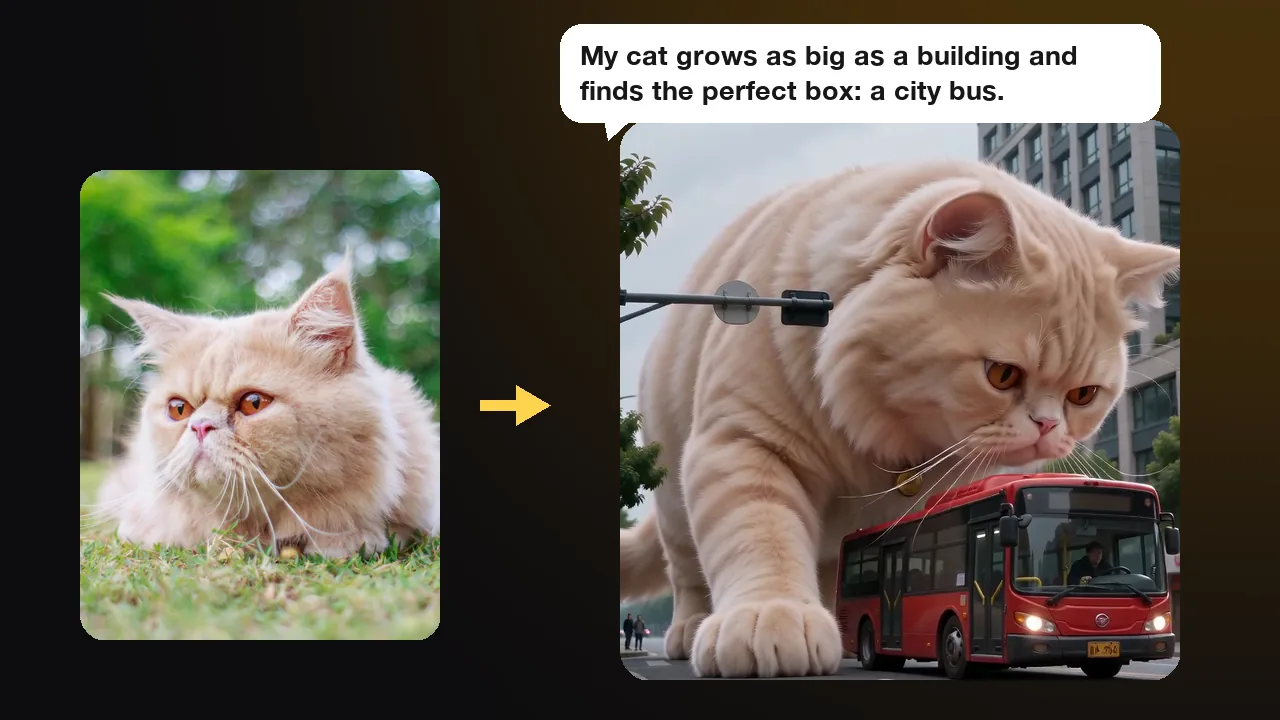
- A Persian grows as tall as a building, finds the perfect box, and it is a city bus.
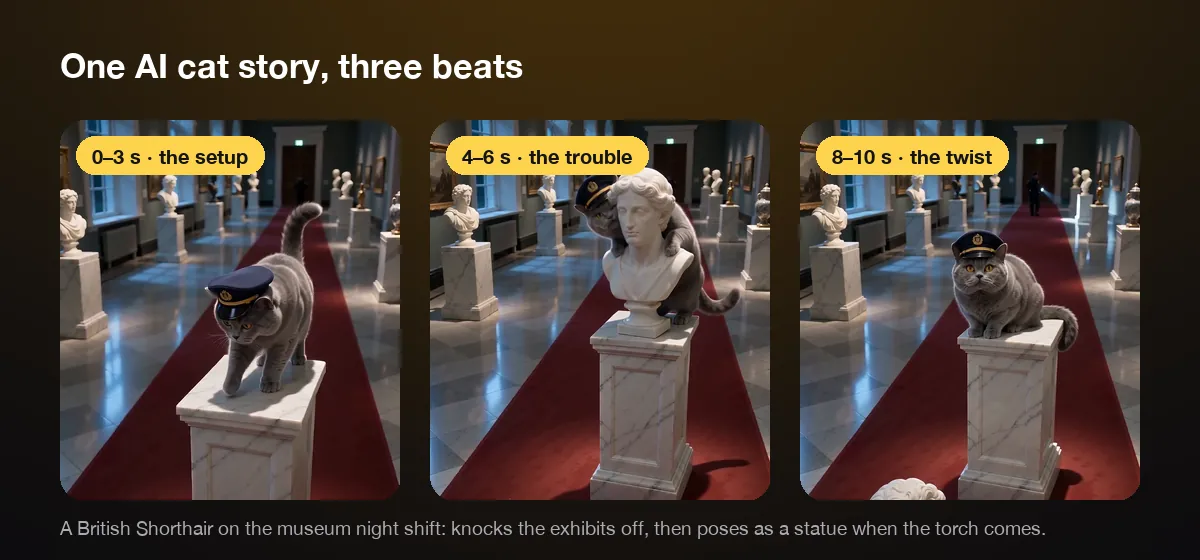
- A British Shorthair on a museum night shift knocks exhibits off their stands, then freezes as a statue when the guard's torch sweeps past.
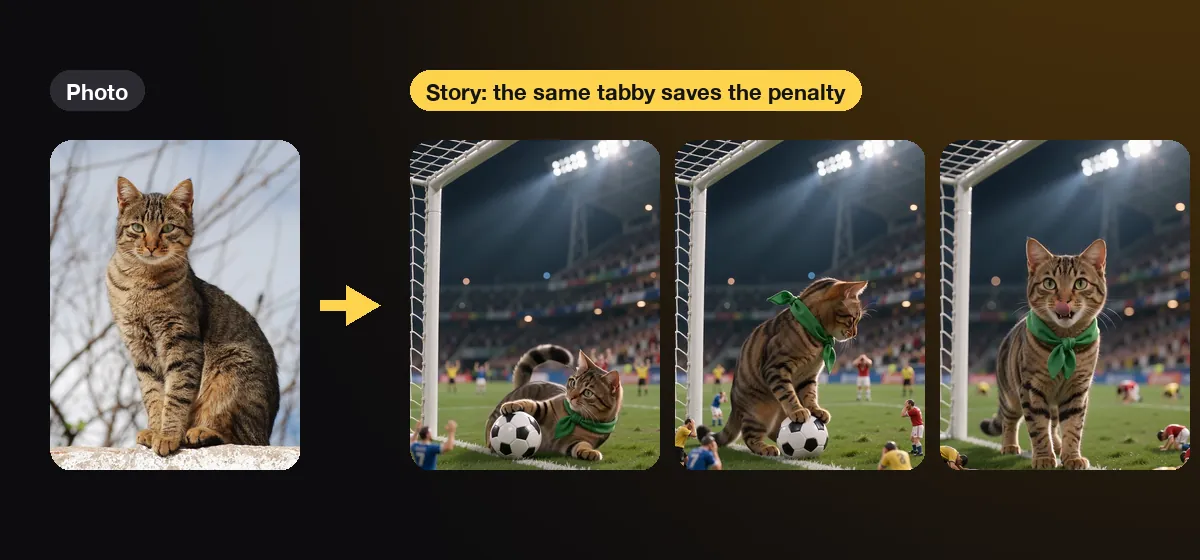
- A tabby goalkeeper saves a penalty, sits on the ball, and gets confetti on its head.
If you want a story with more structure, Story Lab builds a 10-second film from story cards: you pick the setting, the trouble and the ending, and the film is written around your pet. For the technical side of photos, prompts and glitch fixes, our guide on how to make AI cat videos goes deeper.
What you will not get is a three-minute melodrama in one click. The generator makes one scene of up to 15 seconds. For a longer story, make the scenes one by one and cut them together in your phone's editor.
What makes a cat story work in 10 seconds?
One cat, one job, one instinct that breaks through at the end. The clips that get shared are the ones where the cat does something very human with total seriousness, and then a very cat thing ruins it. Everything else is detail.
A 10-second story has room for about five to seven beats, one every one or two seconds. The first beat is the hook: something is already happening in the first second, so nobody scrolls past. The middle beats escalate one idea. The last beat is the twist, and the cat's face is clear in it, because the face is the share.
Some practical rules we learned by generating a lot of cats:
- Let the cat stay a cat. The best twist is an instinct: the goalkeeper sits on the ball, the chef steals the fish, the museum guard cat knocks the vase off. Write the human job, and let the cat behaviour be the ending.
- One place, one scene. "Walks to the park, then flies to Paris, then cooks dinner" fails in 10 seconds. One kitchen is enough.
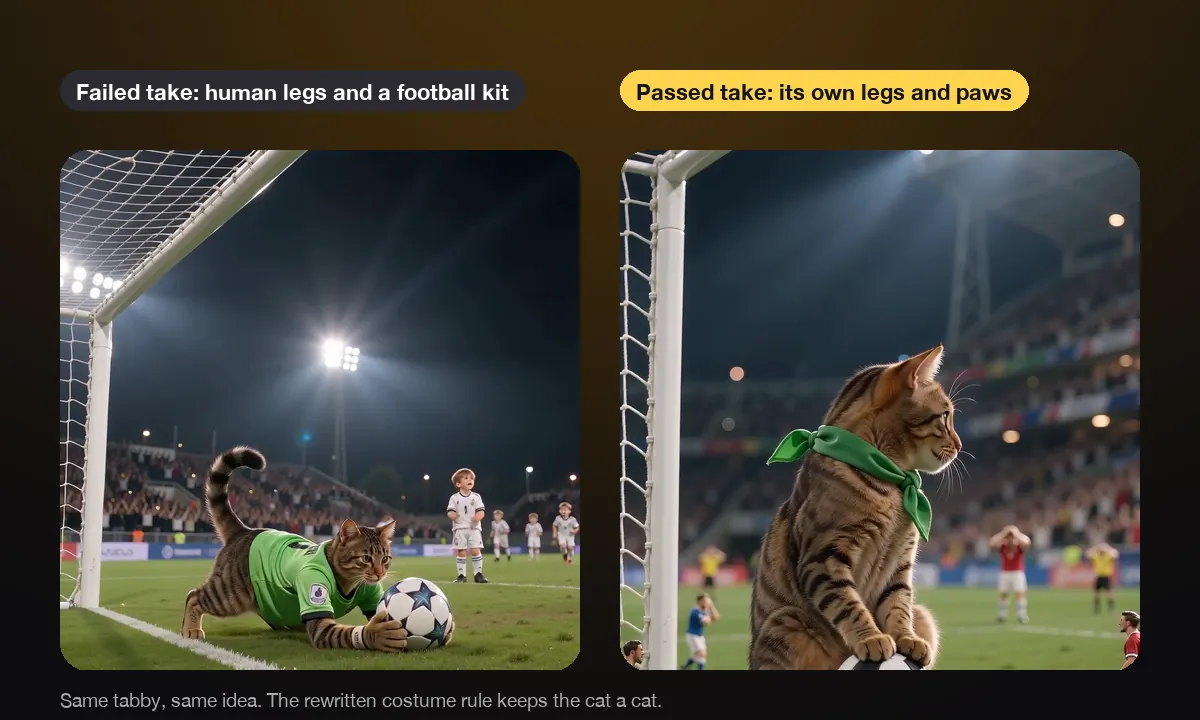
- Keep costumes small. A cap, a vest or a bandana reads well. Trousers, shoes and a full uniform turn your cat into a person with a cat head, and the first version of our goalkeeper came out with human legs for that reason. We rewrote the rule and ran it again.
- Skip on-screen text. Signs, labels and digital clocks come out as garbled letters. Let the sound and the action tell it.
- Short lines, if any. One sentence spoken to camera lip-syncs well. A speech does not.
- Sound matters even when muted. The joke has to work with the sound off, because most people watch that way, but real sound effects make the clip feel filmed rather than generated.
Do you have to label an AI cat story?
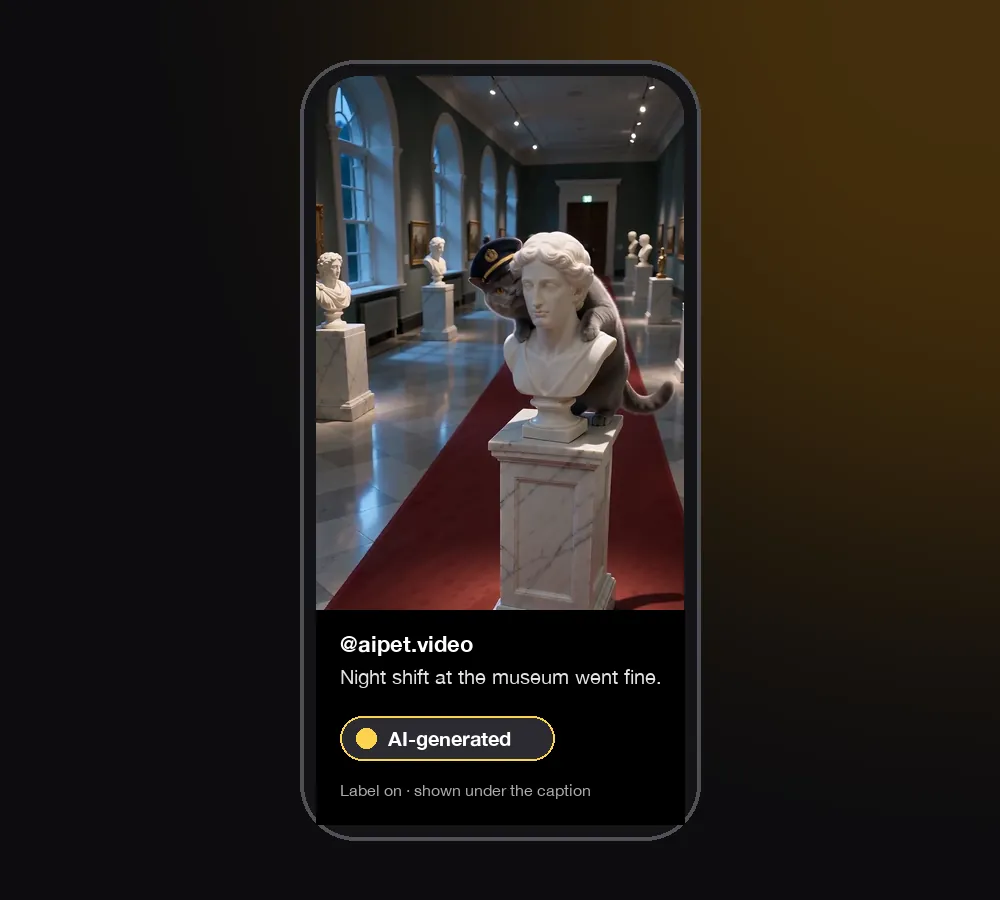
Yes, on the big platforms. TikTok asks creators to turn on the label for realistic AI video, and its help page on AI-generated content explains when it is applied for you. YouTube requires a disclosure for realistic synthetic content, and its page on disclosing altered or synthetic content lists what counts. A photorealistic cat acting out a scene counts on both.
The label costs you little. Viewers of AI cat stories know what they are watching, and the channels with the biggest numbers label their videos. What the label protects against is the other case: a realistic "rescue" video of a kitten in a flood that viewers take for real footage. That is where the genre gets its bad name, and where a missing label can get a video removed.
A related question people search for is whether AI is harming animals. No real cat is involved in an AI cat story, so no animal is put in the rain or in a fire for the shot. The harm, when there is any, is to viewers who are moved by a rescue that never happened, or who donate to a shelter that does not exist. Keep the stories clearly fictional, label them, and do not attach a donation link to an invented kitten.
For your own cat, the rules are simpler. You own the photo, the video is yours to post, and the label tells your followers that the cat really is yours and the story really is not.
AI cat story FAQ
Can AI write a cat story for me?
Yes. Type one line about your cat and the AI cat video generator writes three storyboards, each timed beat by beat with its own sound and music. You can also write the whole thing yourself and have it filmed as written.
How much does an AI cat video cost?
A 10-second video is 70 credits on AIPet. The smallest credit pack is 250 credits for $5.99, so one clip comes to about $1.70. On the Pro plan, 1,000 credits for $19.99 a month, the same clip is about $1.40. Channel-style productions with dozens of scenes cost far more, because every scene is generated several times.
Is there a free AI cat story generator?
Free tiers of general AI video tools exist, with watermarks and queues. On AIPet the story generator is paid, and the free preview for new accounts is a you-and-your-pet story or a talking-pet clip, not a custom cat story.
Can I make a sad AI cat story?
Yes, within limits. The generator keeps the scene safe and everyday, so a cat waiting by the window in the rain works, while fire, injury and gore do not. Our writers lean toward comedy, because a 10-second clip has more room for a joke than for tears.
Can I download an AI cat story video?
Yes. Every finished video is an MP4 you can download from My videos, vertical and ready for TikTok, Reels and Shorts. Turn on the platform's AI label when you post it.
Next step
Pick the clearest photo of your cat, write one line about the job it would be worst at, and make your cat's story. If you would rather choose from story cards, Story Lab writes the 10-second film for you.
Sources
- TikTok Help Center, "AI-generated content", accessed November 2, 2026.
- YouTube Help, "Disclosing use of altered or synthetic content", accessed November 2, 2026.
- Google search results for "ai cat story", United States, November 2, 2026: view counts and channel descriptions as shown on the results page.